B33 ~ The Pet Food Switching Guide: A Practical Guide to Changing Food Without Chaos, Confusion, or Pantry Waste
B33 ~ The Pet Food Switching Guide: A Practical Guide to Changing Food Without Chaos, Confusion, or Pantry Waste
Couldn't load pickup availability
You will receive an email with your guide(s) within 24 hours of purchase.
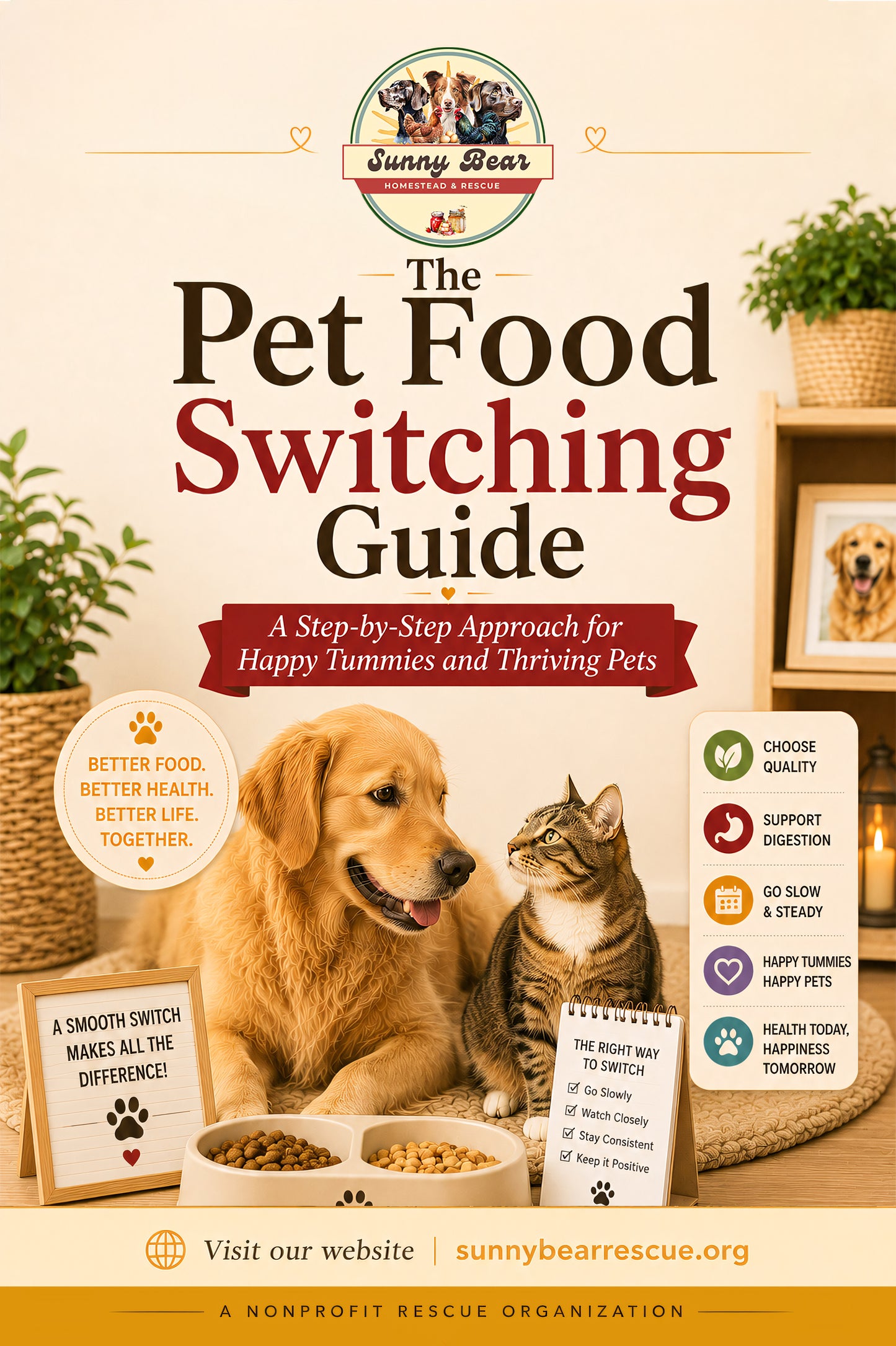
The Pet Food Switching Guide is a practical, reassuring guide created to help pet owners change their dog or cat’s food more safely while reducing digestive upset, confusion, and unnecessary waste. As Guide 33/50 in the Sunny Bear Rescue Guide series, this guide walks pet parents through choosing an appropriate food, preparing supplies, following a gradual transition schedule, tracking meals and symptoms, responding to vomiting, diarrhea, soft stool, picky eating, or food refusal, using treats and toppers carefully, organizing multi-pet feeding routines, supporting puppies, kittens, and seniors, preparing for travel or boarding, managing leftover food, and knowing when to contact a veterinarian or emergency clinic.
This guide is not about finding one perfect food, following every pet-food trend, or expecting every transition to go smoothly in exactly seven days. It is about creating a gradual, flexible routine that helps owners notice changes early and adjust before a small problem becomes a larger one. With transition schedules, meal and symptom trackers, food-selection guidance, digestive troubleshooting steps, feeding safety reminders, caregiver instructions, leftover-food options, and clear warning signs, this guide helps reduce rushed food changes, stomach upset, wasted bags of food, stressful mealtimes, and the worry that a pet’s reaction may have been overlooked.
Perfect for dog and cat owners, families changing brands or formulas, puppies and kittens moving to a new diet, senior pets, picky eaters, pets with sensitive stomachs, multi-pet households, foster homes, families preparing for travel or boarding, and anyone who wants a calmer, more organized approach to switching pet food while keeping their veterinarian’s guidance and their pet’s individual needs at the center of the process.
Share